Garage Design Trends That Make Sense for Texas Homes
Texas garages work best when they are designed for heat, sudden storms, storage demands, and flexible daily use. In much of the state, a garage is not just a place to park. It may also serve as a workshop, home gym, hobby area, or charging spot for an electric vehicle. Because of that, the smartest garage upgrades focus on durability, ventilation, insulation, and layout efficiency rather than trends that only look good in photos.
The most practical garage designs for Texas homes usually include a wind-resistant garage door, better insulation, durable floor coatings, strong lighting, wall-mounted storage, and enough electrical capacity for modern equipment. These upgrades help the space stay more comfortable and more useful throughout the year.
Wind-Resistant Garage Doors and Framing for Texas Storms
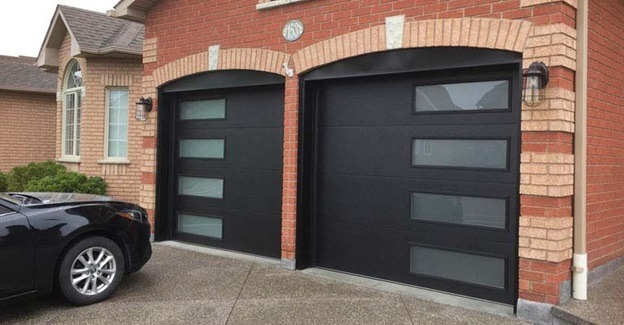
In Texas, one of the smartest garage upgrades is a pressure-rated garage door matched to the home’s wind design requirements. The Building America Solution Center recommends pressure-rated garage doors for homes in hurricane-prone or other high-wind areas, and notes that if a garage door includes windows, the assembly should be pressure rated and impact rated, or protected with a qualified impact-resistant system.
Reinforcement also matters. Guidance from FEMA and resilience organizations shows that garage doors are one of the home’s largest and weakest openings during severe wind events, and that strengthening tracks, hardware, and bracing can reduce the risk of failure.
In practical terms, that means Texas homeowners should look for reinforced tracks, heavier hardware, and professionally installed doors sized for local code requirements, rather than assuming any standard door will perform well in a storm.
Insulation and Mini-Splits That Make Garages More Usable
A comfortable Texas garage starts with insulation and air sealing. ENERGY STAR notes that insulation levels depend on climate zone and that higher R-values improve thermal performance. In much of Texas, wall insulation commonly falls in the R-13 to R-19 range, depending on the home and local code requirements.
For homeowners who want a garage to function as a workspace or flex room, a ductless mini-split is often the most practical cooling upgrade. Garage mini-split sizing varies with insulation, air leaks, and square footage, but many one- to two-car garages fall in the 12,000 to 18,000 BTU range when properly insulated. The real goal is not just adding cooling, but pairing it with insulation so the system is not constantly fighting heat gain through the door, ceiling, and exterior walls.
These upgrades transform your garage into a climate-controlled workspace that withstands everything Texas weather throws at it.
Floor Coatings That Hold Up Better in Texas Heat
Texas garages see high heat, UV exposure, tire traffic, and humidity, so floor coatings need to be chosen carefully. Standard epoxy can work well as a base layer, but polyaspartic topcoats are often preferred for the visible wear layer because they cure quickly and provide strong resistance to UV exposure, chemicals, oils, and hot tire pickup. These qualities are especially useful in hot regions such as North Texas.
For many Texas homes, the most sensible trend is not choosing polyaspartic instead of epoxy in every case, but using a hybrid system where epoxy bonds well to the concrete and polyaspartic protects the surface above it. That approach is more practical than treating floor coatings as purely decorative.
Electrical Capacity for EV Charging and Modern Garage Use
As more homeowners charge electric vehicles at home, Texas garages increasingly need 240-volt capacity and dedicated circuits. NEC 625 guidance shows that a typical residential Level 2 charger often uses a 240V dedicated circuit, with panel capacity verified through load calculations before installation. A common example is a 40-amp charger on a 50-amp circuit, though actual requirements depend on the charger and the home’s electrical service.
This means one of the most practical garage trends is planning for future electrical expansion. Even homeowners who do not yet own an EV may benefit from leaving room in the panel, adding conduit, or upgrading wiring while other garage work is underway. It is often easier and less expensive to do that during a remodel than after the space is finished.
Wall-Mounted Storage and Overhead Organization
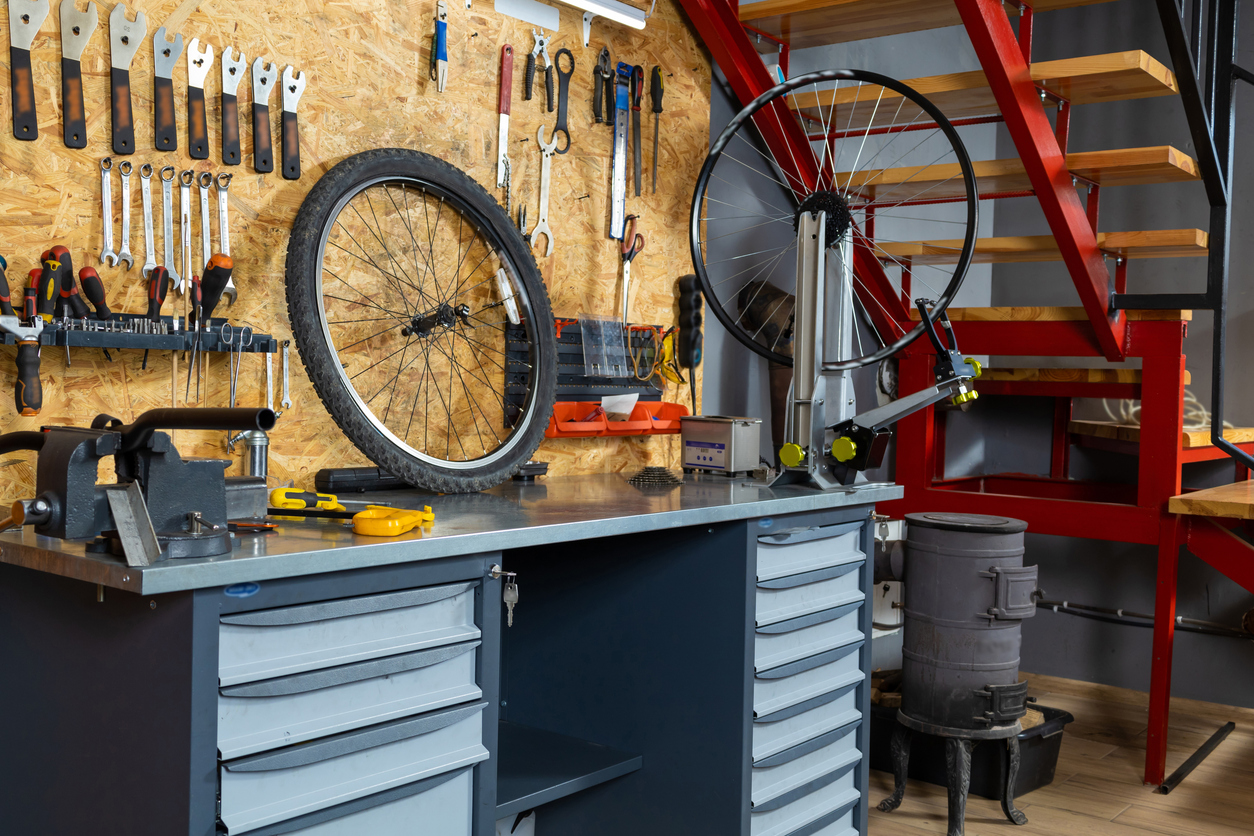
For Texas garages that double as workspaces, vertical storage makes more sense than letting tools and seasonal gear take over the floor. Wall-mounted panels, shelves, and overhead storage racks help keep lawn equipment, bins, and sports gear organized while preserving room for vehicles or worktables.
This trend makes practical sense because many Texas homes use the garage as a true utility space. Wall storage helps reduce clutter, improves walking room, and makes it easier to clean the floor. In a state where garages often store everything from yard tools to holiday decorations, using wall and ceiling space efficiently is one of the most useful design upgrades a homeowner can make.
Lighting That Works in a Real Garage
A garage that functions as more than a parking bay needs bright, even lighting. LED lighting remains the most practical choice because it is efficient, long-lasting, and better suited to task areas than older bulbs. In Texas homes, the smartest setup usually includes general ceiling lighting plus focused task lighting over workbenches, storage walls, or hobby areas.
Motion-activated fixtures can also be useful in entry areas or side yards, but the real design priority is making sure the garage is bright enough for safe parking, tool use, and cleanup. Good lighting is one of the simplest upgrades, but it has an outsized effect on how usable the garage feels day to day.
Multi-Purpose Layouts for Work, Storage, and Fitness
One of the biggest garage design shifts in Texas is toward multi-purpose layouts. Instead of dedicating the whole space to storage, many homeowners now divide the garage into zones for vehicle parking, a workbench, fitness equipment, or hobby storage.
This approach works particularly well in Texas because climate-controlled garages can function as semi-finished spaces for much of the year. A thoughtful layout might include a parking bay on one side, a wall of cabinets on another, and open floor space for tools, exercise equipment, or project work. The best versions are flexible, with storage and furniture that can adapt as needs change.
Materials That Match Ranch, Traditional, and Hill Country Homes
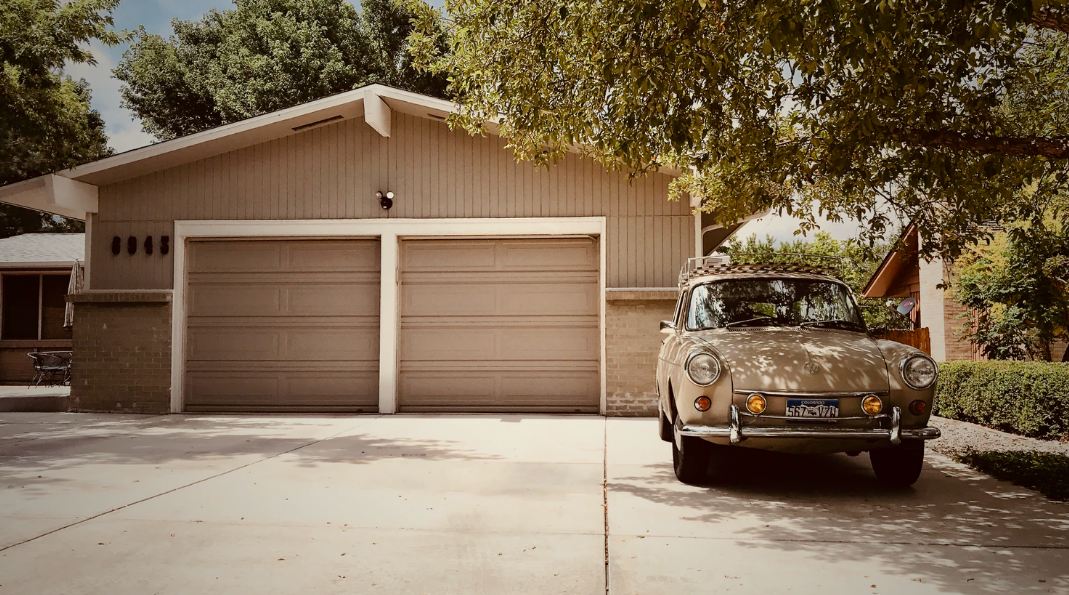
For curb appeal, the garage should also look like it belongs with the rest of the house. In Texas, that often means coordinating garage finishes with limestone, brick, stucco, painted wood, or metal roofing, depending on the home’s style. Ranch and Hill Country homes usually look best when the garage follows the same material palette and roof character rather than standing out as a separate design statement.
A practical Texas garage design therefore does two jobs at once: it improves function inside while keeping the exterior visually consistent with the main house. Matching materials, trim, and rooflines can make even a very utilitarian garage feel integrated and intentional.