Why the American Home Garage Became an Icon in Pop Culture

The American home garage occupies a unique place in cultural imagination. What began as a simple structure for storing vehicles gradually evolved into something far more symbolic. A space associated with creativity, independence, and possibility. Over time, it became a setting where ideas were tested, identities were shaped, and cultural movements quietly took form.
Unlike other rooms in the home, the garage exists on the edge of domestic life. It is neither fully private nor entirely public, giving it a distinct flexibility. Its transformation into a cultural icon did not happen overnight. It was shaped by suburban development, media representation, and real-life innovation. Together, these forces turned the garage into one of the most recognizable symbols of American creativity and self-made ambition.
From Carriage House to Cultural Icon
Before automobiles became central to daily life, storage structures served a much simpler purpose. Wealthy households maintained carriage houses—functional buildings designed to protect horse-drawn vehicles and equipment. These structures were utilitarian, often located behind homes and largely disconnected from everyday living spaces.
As automobiles replaced horses in the early 20th century, these buildings evolved into garages. Initially, they retained their practical purpose, but their proximity to the home began to change. Attached garages became more common, bringing this once-separate space closer to daily life and making it more accessible.
This shift laid the foundation for the garage’s cultural transformation. What started as a storage area gradually became a flexible extension of the home—one that could be repurposed in ways that went far beyond its original function.

How the Suburbs Turned the Garage Into a Status Symbol
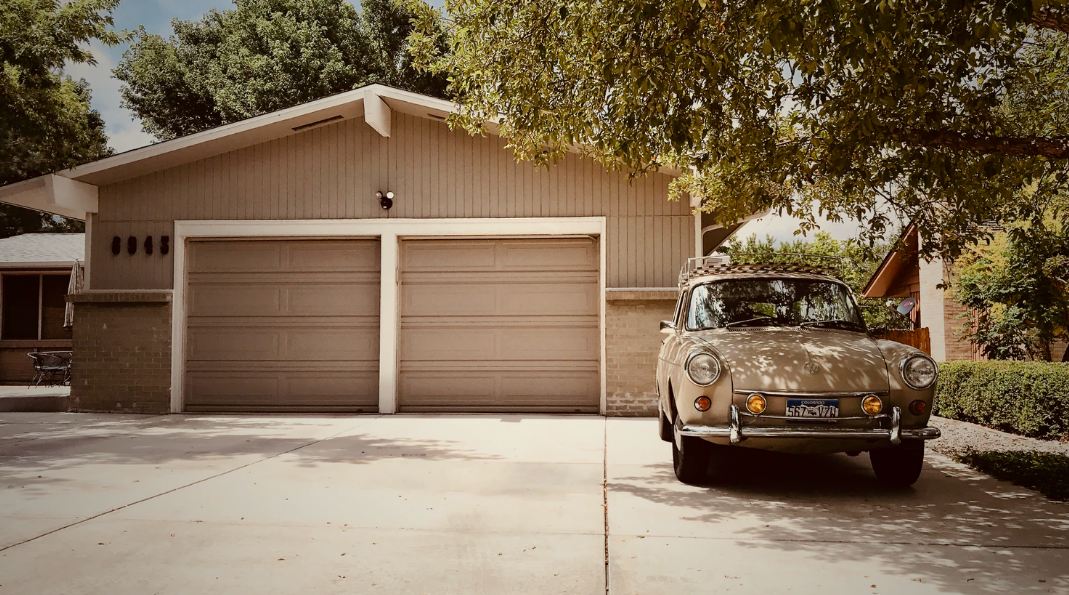
When the postwar housing boom reshaped American suburbia, the garage transformed from a simple shelter into a marker of middle-class achievement. The FHA reinforced this shift by financing only homes with garages, making status signaling unavoidable. You could measure a family's standing by what sat in their driveway. Four factors drove the garage's rise as a curb appeal centerpiece:
- FHA mortgage policies excluded garageless homes
- Expanding car sizes demanded larger, more prominent structures
- Nuclear family imagery linked garages to suburban success
- Developers prioritized front-facing designs for maximum visibility
The garage's roots as a status symbol stretch back further than the postwar era, as Frank Lloyd Wright's 1908 Robie House included a three-car garage, signaling from the start that automotive accommodation was a mark of forward-thinking prestige.
The Garage as America's Favorite Tinkering Space
Tinkering became an American pastime the moment men discovered their garages could hold more than just a car. Post-WWII suburbs gave you a raw, unfinished space separate from your home's cleanliness standards, and that freedom changed everything. Tool rituals developed naturally — wrenches hung like trophies, grease rags folded nearby, projects sprawling across concrete floors.
The hot rod era made garages sacred ground, birthing legends like Ed "Big Daddy" Roth and countless weekend customizers chasing speed dreams. Advice books even promoted youth workshops, pushing fathers and sons toward shared mechanical pursuits that reinforced the garage's cultural grip.
C.G. Johnson's 1921 overhead door patent made frequent access practical, and by the 1960s, your attached garage wasn't just storage — it was where American ingenuity lived. By the 1970s, attached garages had become common enough to offer direct access to the kitchen and laundry room, weaving the garage even deeper into the fabric of daily home life.

Why Did So Many Billion-Dollar Companies Start in a Garage?
Something about the American garage made it the perfect incubator for billion-dollar ambitions. It wasn't luck—it was the environment itself fueling startup mythology. When you strip away corporate overhead, you're left with raw focus. Resource frugality forced founders to solve problems creatively rather than throw money at them.
Here's what the garage consistently provided:
- Zero rent pressure, maximizing limited capital
- Privacy to experiment without investor scrutiny
- Physical separation from distraction
- Freedom to pivot without institutional resistance
Microsoft, Google, Amazon, and HP all leveraged these same conditions before scaling into trillion-dollar giants. You don't need a prestigious address to build something transformative—you need constraints that sharpen your thinking.
The garage delivered exactly that, turning ordinary tinkerers into industry-defining founders. Even Mattel, now the highest grossing toy manufacturer, got its start in a Southern California garage where its founders built dollhouses from picture frame scraps.
Check out MrPopCulture.com and learn more about pop culture trends in home garages!
How Did Hollywood Turn the Garage Into a Cultural Icon?
Hollywood took the American garage and transformed it into something far bigger than a place to park cars—it became a symbol of dreams, rebellion, and identity. Through cinematic staging, films positioned cars as extensions of heroism and freedom, shaping how you perceive mobility and personal identity. Celebrity vehicles reinforced that narrative, turning automobiles into cultural artifacts rather than simple transportation.
Museums like the Hollywood Cars Museum deepened that connection, curating celebrity vehicles as immersive storytellers linking you directly to entertainment icons. Even lowrider culture made the leap from street corners into fine art galleries, proving the garage's cultural reach extended beyond cinema.
Hollywood didn't just romanticize cars—it redefined the spaces that housed them, making garages portals into collective memory and pop culture history. The 1966 Batmobile, built from a customized 1955 Lincoln Futura concept car by George Barris. It stands as one of the most celebrated examples of how a vehicle transcended transportation to become a enduring symbol of an entire era of superhero storytelling.
Television and Sitcom Culture: The Garage as Everyday Stage
While films elevated the garage into a cinematic symbol, television made it feel familiar and routine. Sitcoms and family-centered shows frequently used the garage as a setting for conversations, projects, and moments of transition between characters. It became a recognizable backdrop for everyday life.
In shows like Home Improvement, the garage functioned as both workshop and stage, where humor, conflict, and problem-solving played out. It reinforced the idea of the garage as a hands-on space tied to identity, particularly around craftsmanship and personal competence.
This repeated exposure normalized the garage’s cultural role. It was no longer just a place for cars or occasional projects—it became a space where stories unfolded, helping audiences connect the garage to their own lived experiences.
How the Garage Birthed Garage Rock, Skate Culture, and Underground Movements
The garage didn't just house cars—it incubated entire cultural movements. After the Beatles' 1964 Ed Sullivan appearance, teens grabbed guitars and claimed their garages as creative sanctuaries. Parents banned indoor practice, so the garage became the default stage. Four movements that grew from that concrete floor:
- Garage rock — raw, high-energy bands like The Sonics pioneered protopunk sounds
- DIY zine culture — underground publications documented local scenes outside mainstream media
- Skate photography — garages served as backdrop and refuge for skaters building identity
- Punk evolution — Detroit-area bands transformed garage energy into full rebellion
You're witnessing rock's most grassroots origin story. No formal venues, no gatekeepers—just amplifiers, ambition, and a two-car garage that changed American youth culture permanently. The movement's name itself reflects this reality, rooted in an era when amateur bands rehearsed and recorded in literal garages with little formal training but boundless raw energy.
The Garage as a Space of Privacy and Independence
One of the garage’s most defining features is its separation from the main living space. This physical distance created a sense of privacy that allowed individuals—especially young people—to experiment, create, and express themselves without constant supervision.
For teenagers, the garage often became a first space of independence. Whether practicing music, modifying bikes, or simply gathering with friends, it provided a setting that felt both personal and free from formal expectations. This environment encouraged risk-taking and creativity.
This sense of autonomy contributed to the garage’s cultural meaning. It became associated not just with activity, but with the freedom to explore identity. In this way, the garage functioned as an informal space of growth and self-definition.
What Does the American Garage Really Say About Us?
The cultural significance of the garage ultimately lies in what it represents. It is a space where practicality and imagination coexist, where everyday objects can become tools for creativity or innovation.
At the same time, the garage reflects broader patterns of American life. It reveals a balance between ambition and sentimentality—used both for building new ideas and storing remnants of the past. It is a place of both action and memory.
In this way, the garage functions as more than a physical structure. It becomes a reflection of cultural values—self-reliance, experimentation, and the desire to create something meaningful from ordinary circumstances.
Conclusion
The American garage’s journey from carriage house to cultural symbol reveals how everyday spaces can take on deeper meaning over time. What began as a practical solution for storage evolved into a site of creativity, innovation, and cultural expression.
Its influence spans multiple domains—from suburban development and entrepreneurship to music, film, and subculture. In each context, the garage represents possibility: the idea that something significant can begin in a modest, overlooked space. Even as technology and lifestyles change, the symbolism of the garage endures. It remains a reminder that creativity does not require perfection or prestige—only space, freedom, and the willingness to begin.